
Former Fed governor’s “regime change” push on monetary policy could reshape path for rates, the central bank's balance sheet, and markets at large.
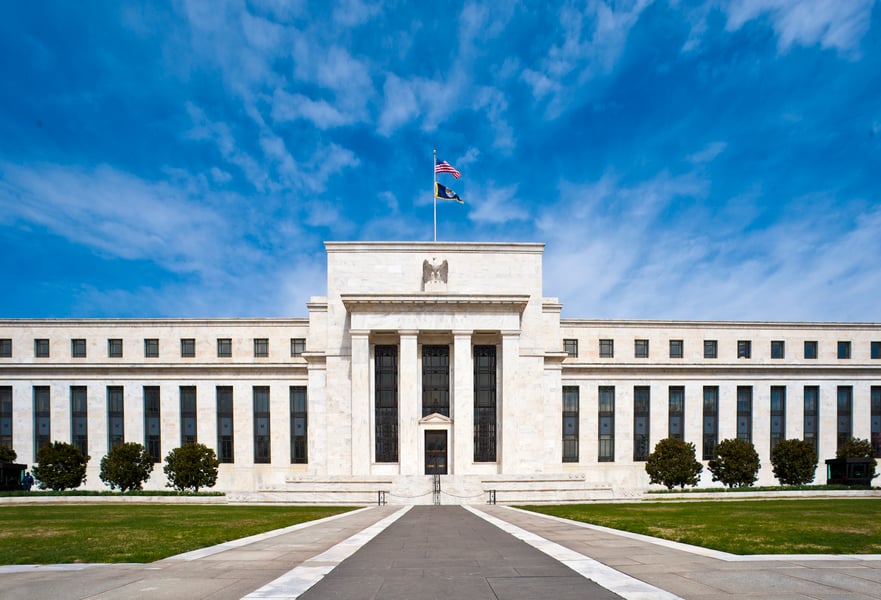
President Donald Trump’s choice of former Federal Reserve governor Kevin Warsh to succeed Jerome Powell as Fed chair could mark a sharp turn in US monetary policy, with potentially significant implications for advisors, investors, and markets.
Trump announced the pick Friday on Truth Social, tapping the 55-year-old Warsh, now an adviser at Stanley Druckenmiller’s Duquesne Family Office and a fellow at Stanford University’s Hoover Institution.
The nomination comes as the Fed’s benchmark rate stands in a 3.5% to 3.75% range following this week’s decision to hold steady, and as the president continues to press for much lower borrowing costs.
Trump has argued that the central bank should cut its policy rate to 1% or lower to reflect what he describes as a strong economy and to ease pressure from federal debt now roughly equal to one year’s gross domestic product. He has frequently blasted Powell, whom he installed as chair during his first term, for being too slow to raise rates when inflation climbed after the pandemic and then too cautious in cutting them.
Warsh, who served on the Fed’s board from 2006 to 2011, has positioned himself as both an insider and a critic of the modern central bank. He helped design emergency lending facilities during the 2007–2008 financial crisis and backed early asset purchases, but later broke with colleagues by opposing a second round of quantitative easing.
In recent years, Warsh has called for what he termed “regime change” at the Fed, arguing that the institution has become insular and overly reliant on models that failed to anticipate post-pandemic inflation. He has also faulted Powell and other incumbents for eroding trust with investors. “The credibility deficit lies with the incumbents that are at the Fed, in my view,” he told CNBC in a July interview.
A central focus for Warsh has been the Fed’s multi-trillion-dollar balance sheet. He has said the expansion of bond holdings was justified as a crisis response but should have been reversed earlier. Shrinking the portfolio is central to his path toward easier policy: by cutting the balance sheet, “you have created space to lower interest rates,” he previously told Barron’s.
For advisors, that mix of hawkish rhetoric on the balance sheet and openness to lower policy rates could complicate market narratives. Warsh has argued that replacing Powell with a chair seen as more credible could itself help pull down long-term yields, even before the Fed delivers deep cuts. At the same time, many current voting members of the Federal Open Market Committee have signaled reluctance to accelerate easing until inflation is more firmly on track toward the 2% goal.
That tension is already drawing scrutiny on Capitol Hill. In early reactions to the nomination, Senate Banking Committee chair Tim Scott praised Warsh as having “essential knowledge” to restore “accountability and credibility” at the Fed and said he looks forward to “leading a thoughtful and timely confirmation process.” But Republican Sen. Thom Tillis has vowed to oppose moving any nominee until a Justice Department investigation into a major renovation project at the Fed’s Washington headquarters – and a related subpoena to Powell – is resolved. While Tillis called Warsh “a qualified nominee,” he said that “protecting the independence of the Federal Reserve from political interference or legal intimidation is non-negotiable.”
Market reaction may be relatively contained in the near term, given that investors have long anticipated a more dovish stance from Powell’s successor. But the nomination underscores uncertainty around how much control any chair will have over the committee. Analysts quoted by CNBC note that while Trump has made clear he wants rapid and sustained cuts to support housing and lower the cost of servicing roughly $37 trillion in US debt, the rest of the committee has remained strongly data-dependent.
“Analytically, we expect he will be strongly aligned with the Administration’s arguments that booming productivity will allow for neutral or accommodative rates even with robust growth,” wrote Tobin Marcus, head of US policy and politics at Wolfe Research.
Krishna Guha, head of global policy and central bank strategy at Evercore ISI, said in a note that Warsh’s reputation gives him room to nudge the committee toward at least two and “plausibly three cuts this year” if the data cooperate.


