
WP trawls through the highlights of the longest ever State of the Union address
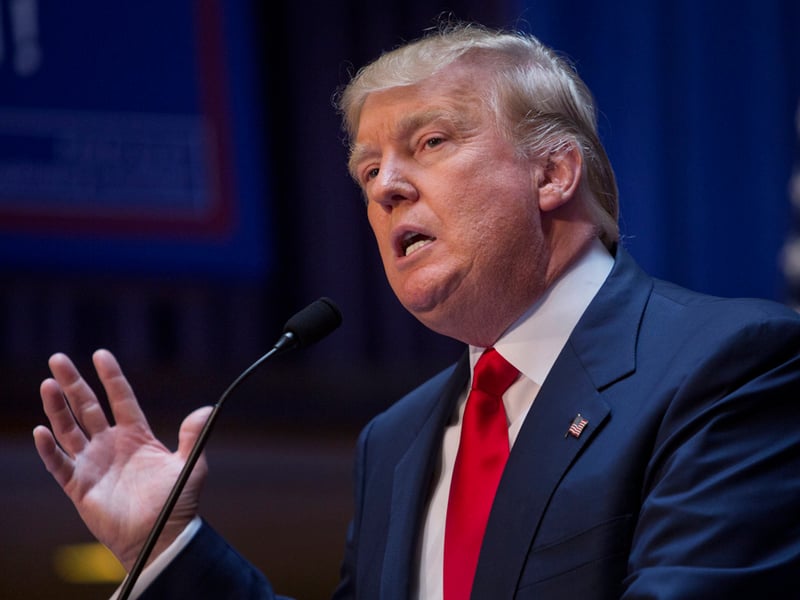
President Donald Trump used his 2026 State of the Union address to argue that the United States is entering what he called a new “golden age,” powered by tariffs, a buoyant stock market and an expanded suite of retirement-savings programs.
But the exuberant narrative he offered from the House rostrum sits uneasily beside slower underlying growth, soft job creation and voters who remain unconvinced that their own finances are improving, according to the Wall Street Journal.
The speech, lasting almost two hours to become the longest ever State of the Union address, laid out a policy program that is unusually focused on capital markets: a proposed federal 401(k) match for workers without employer plans, government-seeded investment accounts for children, continued tariff escalation, and promises of large increases in defense spending financed by trade levies. The combination could expand the long-run pool of assets under management while keeping fiscal and geopolitical risks firmly in view.
A new government 401(k) match
The evening’s most concrete retirement proposal was a federal match for workers who currently do not have access to a workplace plan. In his address, Trump announced that Washington would contribute up to $1,000 per year to qualifying 401(k)-style accounts for those whose employers do not sponsor one.
The initiative targets roughly 56 million Americans outside the traditional employer-plan system and would be modeled on the government’s Thrift Savings Plan for federal workers, according to that reporting. Contributions would flow into a limited menu of diversified funds, with the federal match functioning much like an employer contribution.
If enacted as described, the plan would create a new pipeline of steady, small-ticket flows into professionally managed strategies that resemble existing target-date and index options in the TSP. That could, over time, expand the reach of low-cost, institutional-style products into segments of the labor market—gig workers, employees of small businesses, part-time staff—who have long been difficult for wealth managers and recordkeepers to serve at scale.
But the fiscal architecture is far from settled. Critics quoted by MarketWatch question whether the administration has clear statutory authority or a dedicated revenue stream for open-ended federal matching, especially as Social Security’s trust fund approaches projected depletion in the early 2030s, raising the risk of automatic benefit reductions without congressional action.
Trump Accounts deepen push toward universal equity ownership
The new match is designed to sit alongside “Trump Accounts” for children, investment vehicles seeded with a one-time $1,000 government contribution and open to additional deposits by families and, in some cases, employers. Those accounts, established under earlier legislation, are intended to give every eligible child at least a modest stake in capital markets from an early age.
Several large asset managers have already signaled interest in aligning with the program. One high-profile firm has pledged to match the government’s initial contribution for eligible employees’ children, positioning the accounts as part of an employee-benefits package as well as a future source of long-duration assets.
Tariffs as revenue engine and political message
The president also again celebrated sweeping levies on imports, now moving toward a 15% global rate following an earlier 10% duty, as both a tool for reshoring production and a funding source for broader ambitions, including a roughly 50% jump in Pentagon spending.
He boasted that his administration had secured more than $18 trillion in investment commitments in a single year, contrasting that tally with what he described as less than $1 trillion during his predecessor’s term. Fact-checkers have challenged those numbers, noting that the headline figure appears to be based on a loose aggregation of announcements and pledges rather than documented capital inflows.
Independent reviews also dispute his claim that tariffs are pushing down prices for consumers. A Guardian analysis pointed out that household energy costs rose by nearly 7% between 2024 and 2025, and average gasoline prices were higher than the sub‑$2.30 levels cited in the address. But the president continues to argue that imported goods will bear the burden of new levies, positioning tariffs as an alternative to higher income taxes rather than a potential source of pass-through inflation.
A “golden age” economy that many voters do not recognize
Much of the first hour of the speech dwelled on economic successes including lower inflation, a surging stock market, rising construction employment and a turnaround from what Trump cast as a period of national decline. He described the country as “bigger, better, richer and stronger than ever before” and portrayed recent price trends as a form of “tax cut” for households.
Macroeconomic indicators offer a more mixed picture. As the Wall Street Journal reported, inflation has indeed eased from the peaks experienced under President Biden, and equities have posted a strong run since Trump’s return to office. But growth slowed sharply in late 2025, overall job creation last year was weak by historical expansion standards, and unemployment has ticked up to the low‑4% range.
Public sentiment remains notably sour. An AP‑NORC poll cited by PBS found that only about four in ten Americans approve of the president’s handling of the economy, while a majority say the country is worse off than a year ago. Concerns over housing costs, health-care expenses and everyday affordability remain central themes in voter interviews highlighted by both the Journal and other national outlets.
Energy, AI infrastructure and the role of Big Tech
The address also tied economic policy to energy and emerging technology infrastructure. Trump boasted that US oil and natural-gas production is at or near record levels and claimed the United States had “received” more than 80 million barrels of oil from Venezuela after ousting Nicolás Maduro.
At the same time, he acknowledged mounting public frustration over the electricity demands of artificial-intelligence data centers. To address fears that AI-related loads will drive up household utility bills, Trump said his administration would press major technology firms to build and finance their own power plants and grid upgrades tied to new data-center projects, rather than relying primarily on ratepayer-backed regulated utilities.
Democrats, in their formal response and subsequent interviews, have argued that Trump’s economic message remains detached from lived reality for many families, emphasizing continued stress around rent, homeownership and medical costs.
US stock futures were trading higher along with global markets early Wednesday, but reaction to the State of the Union address were muted with analysts considering it largely uneventful. Investors are focused on the improvement in US equities from the previous session and earnings from Nvidia due to be reported after the closing bell.


